
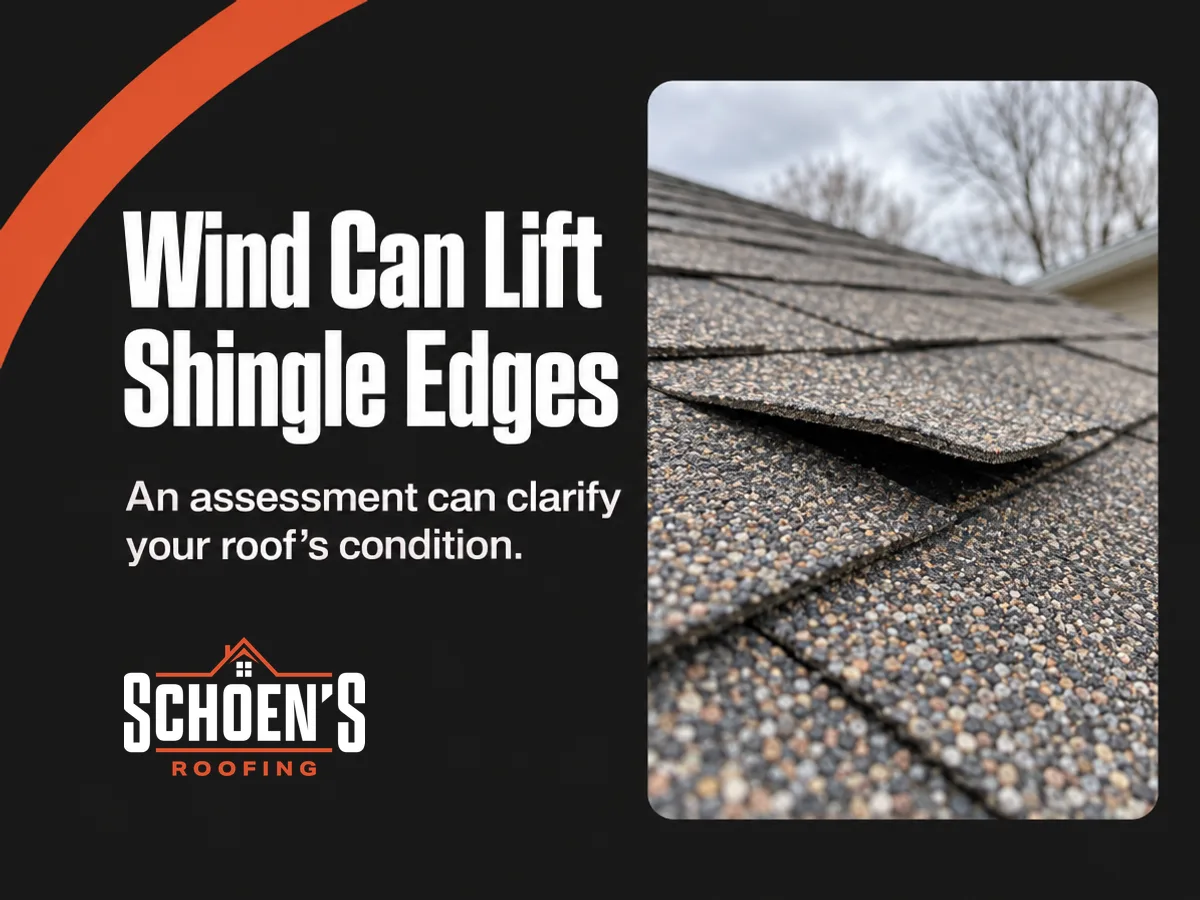
When a storm rolls off the Nebraska side and across the river, the next morning brings the same question up and down the block: did the hail get us, or is the roof just old? The answer shapes everything that comes next, from whether an insurance claim makes sense to whether you need a few shingles or a whole new roof.
Here is how to tell the two apart, what to write down while the details are fresh, and when it is time to have someone get up there with a camera and a ladder.
Side by side: impact or age
| What you notice | Points toward hail | Points toward age |
|---|---|---|
| Where the marks are | Scattered hits grouped on the slopes that faced the storm | About the same everywhere for a roof of that age |
| Shingle surface | Dark round spots, bruises that feel soft when pressed, granules knocked off at the hit | Bald patches across wide areas, curling, cracking, stiff tabs |
| Metal parts | Fresh dings in vent caps, valley metal, gutters, and AC unit fins | Rust, dried caulk, nails backing out with no dents nearby |
| When it showed up | Right after a storm you can put a date on | Slowly, over several seasons |
| The rest of the street | Similar dents on neighbors' gutters and siding | Your roof looks tired while similar houses look fine |
One spot rarely proves anything. A pattern does. Dented vent caps on the west side lined up with bruised shingles on the same slope tell a much stronger story than a single bare patch on a roof that is already twenty-some winters old.

Write it down while it is fresh
- 1.Note the date and rough time the storm came through.
- 2.From the ground, photograph each side of the house, then zoom in on gutters, downspouts, window wraps, and the AC unit.
- 3.If you can get into the attic safely, look for damp sheathing or new stains and photograph them.
- 4.Stay off the roof. Wet, dented, or steep shingles are no place for a homeowner.
- 5.If water is coming in, put buckets down, move belongings, and ask about temporary protection.
- 6.Hold off on sealant or patch kits until someone has documented the damage.
What a trained eye checks
A real inspection looks at more than the front slope. Expect the inspector to check every slope, the ridge, valleys, flashing, vents, and gutters, and the attic when it is reachable. Hail usually leaves a direction. The slope that faced the storm can be covered in hits while the sheltered side looks almost untouched.
Wear does not need a storm to explain it. It shows up as even aging: curled edges, cupped tabs, and granule loss spread across the whole roof. Algae streaks, popped nails, and scuffs from foot traffic can also be mistaken for hail, which is why close-up photos matter.
Ask how damage will be recorded and whether your contractor will be on site when the adjuster visits.
Wind and hail on the same roof
Plenty of storms through Pottawattamie County bring both. Wind tends to lift and crease shingles or tear them loose along an edge. Hail leaves round impact marks. Both can show up on one roof, and each should be recorded separately. A report that lumps everything into "storm damage" makes the claim conversation harder.
A word on insurance
Policies are written to cover sudden storm damage, not a roof wearing out with age. Good photos and a written inspection report make the difference between a clear claim and a frustrating one. Your deductible and the wording of your policy decide what gets paid, so read both. Keep a single folder with the storm date, your photos, the inspection report, and anything the adjuster leaves behind.
Do not sign off on a tear-off until you know what the insurer approved and what you will owe out of pocket.
Repair, partial, or full replacement?
- Repair often works when hits are few and the rest of the roof has plenty of life left.
- A slope or section can fit in between, though color match and the age of the rest of the roof still matter.
- Full replacement comes up when hits are spread across the roof, the roof is near the end of its life, or matching shingles are no longer made.
A trustworthy roofer will tell you which option the evidence supports, even when it is the smaller job. Age, how far the damage reaches, and cost per remaining year are the decision itself, covered in roof repair vs replacement.
Mistakes we see after a big storm
- Waiting weeks to take photos while rain and foot traffic muddy the picture
- Climbing up because a neighbor said the damage was obvious
- Signing a contract at the door before you understand it
- Smearing sealant over marks before anyone has looked
- Hiring a crew from out of state without asking who will honor the warranty next year
Different roofs, different signs
Asphalt shingles show hail differently than metal panels or other systems. If your house has a metal roof or something less common, mention it when you schedule so the inspector knows what to look for.
When to call
If you see dented metal, new attic stains, or granules piling up at the downspouts after a storm, it is worth a documented look. Schoen's handles hail damage repair in Council Bluffs, and our guide to the signs of hail damage on a roof has more photos of what to look for. For anything else on your roof, reach out to Schoen's, your local roofing contractor in Council Bluffs.
FAQ
Can I spot hail damage without going up on the roof?
Partly. Dents in gutters, vent caps, and AC fins are often visible from the yard. Shingle hits usually need a closer look from someone with the right gear.
How soon should I get the roof looked at?
As soon as you reasonably can after the storm, especially if anything is leaking. Early photos and early protection make every next step easier.
Should I hire a public adjuster for a hail claim?
Not always. Start by asking your insurer and your roofer what documentation they need.
Only one side looks bad. Is that normal?
Yes. Hail usually comes from one direction. The whole roof should still be checked.