
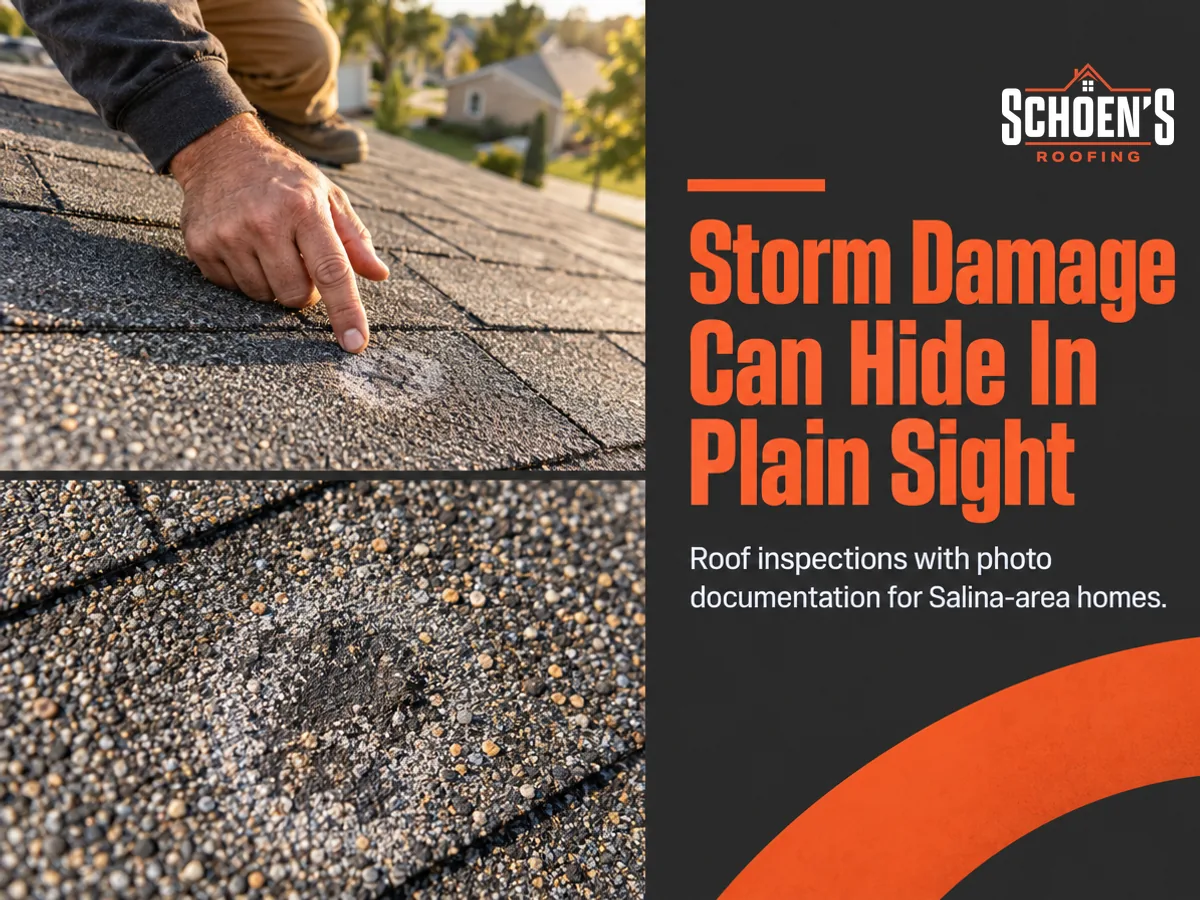
When a storm crosses the river from Omaha and a limb comes down on your roof, or hail and wind leave a section of shingles torn open, the first goal is simple: keep the water out until the roof can be fixed properly. A tarp is how you buy that time.
A tarp is not a repair, though, and a badly placed one can make things worse. Here is what a good emergency tarp looks like, what to avoid, and what to do inside while you wait.
What does a good roof tarp do that a bad one does not?
A good tarp sheds water, stays put in the next wind, and goes on after the damage under it has been photographed. A bad one does the opposite.
| Done right | Done wrong | |
|---|---|---|
| Purpose | Temporary protection until a permanent repair | Treated as a long-term fix |
| Fastening | Edges held down with wood strips fastened into solid decking | Weighted with bricks, or nailed through loose shingles that tear free in the next gust |
| Coverage | Runs up and over the ridge and well past the damage | Stops just short, so water runs in under the top edge |
| Water flow | Lapped so water runs off the roof edge | Sags in the middle and holds a pool of water |
| Records | Damage photographed before it is covered | Covered first, so the adjuster cannot see what is underneath |
| Safety | Installed by a crew with fall protection | A homeowner on a wet, damaged roof after dark |
Should you tarp the roof yourself?
In most cases, no. A storm-damaged roof can have soft decking, loose shingles, and slick granules, and after dark it is even more dangerous. Falls from ladders and roofs send people to the emergency room every year. The only time it makes sense is a small spot on a low, easy-to-reach section of roof, in calm and dry weather, with someone holding the ladder. Everything else is a job for a crew.
What to do inside in the first few hours
While you wait for the tarp, protect the inside of the house:
- 1.Keep people away from water and wiring. When water is dripping near a ceiling light or running down a wall with outlets, turn that circuit off at the panel, as long as you can get there on a dry floor.
- 2.Take photos and video. Shoot the roof from the ground, the yard, the attic, and any ceilings or walls with fresh stains. Your phone will date them for you.
- 3.Catch the water. Buckets under drips, towels on the floor, furniture and electronics moved out of the way.
- 4.Watch for a bulging ceiling. Drywall that sags with water can come down without warning. A small hole at the lowest point, with a bucket under it, lets it drain in a controlled way. If you are not comfortable doing that, keep the room clear and wait for help.
- 5.Call for a tarp and an inspection in the same call. It saves a second trip.
- 6.Hold on to every receipt for the emergency work if you plan to file a claim.
Our guide on what to do after a hailstorm covers the days that follow, including when to file.
How a professional crew tarps a roof
At Schoen's, tarping is handled as the first step of a storm repair. The crew will usually:
- Photograph the storm damage before anything covers it, so your claim has the evidence
- Check the decking around the opening to find solid wood to anchor into
- Use a heavy-duty tarp sized to cover the damage with plenty of overlap
- Carry the tarp up and over the ridge when the damage allows it, so water cannot get under the top edge
- Fasten the edges and seams so wind cannot get under them and lift the tarp
- Make sure water runs off the roof instead of pooling on the tarp
- Schedule the permanent repair or replacement before leaving
It looks simple from the street. The small details decide whether it holds through the next storm.
What a tarp does not do
- It does not repair the decking, underlayment, or flashing underneath
- It does not show you or your insurer what caused the damage
- It does not replace a written scope for the permanent fix
Think of it as a bandage that holds things together until the real repair.
Why Council Bluffs roofs need a closer look after a storm
Council Bluffs sits across the Missouri River from Omaha and gets the same storm systems that hit eastern Nebraska. Many homes climb up into the Loess Hills, where wind wraps around the bluffs and catches roof edges, and the older neighborhoods near downtown have steep, detailed roofs with plenty of valleys and flashing for water to find. Winter adds snow and ice that will work into any opening a tarp does not fully seal.
If your tarp went on in a hurry before a cold snap, check it from the ground after the next big wind or snowfall. If it loosens, starts to flap, or holds a pool of water, call the crew back before the water finds its way in.
After the tarp comes off
Once the roof is covered, the next step is a full inspection and a written scope for the permanent repair or replacement. If you are filing a claim, the photos taken before tarping and the tarp invoice become part of your documentation, and Schoen's can help with a roof insurance claim from there. Do not let the tarp become the plan. The longer it stays up, the more the sun and wind wear it down.
FAQ
Will insurance pay for emergency tarping?
Often, yes, if a covered storm caused the damage. Insurers generally want homeowners to limit further damage once they know about it, and a tarp is the usual way to do that. Read your own policy and hold on to the invoice.
How long can a tarp stay on a roof?
Plan on weeks, not months. A well-fastened tarp will usually hold while the real repair gets on the calendar, but sun and wind wear the material down over time, and an old tarp eventually lets water through.
Can a roof be tarped in the snow?
Sometimes, but snow and ice make the roof far more dangerous to walk, and wet decking is harder to fasten into. Call and describe the damage, and the crew will tell you what can be done safely that day.
What should I tell the crew when I call?
Where the water is coming in, roughly where the damage is on the roof, whether anything is still hanging or loose, and whether you plan to file a claim.
When hail or wind leaves your roof open to the weather, Schoen's offers same-day emergency roof tarping across our service area. For roofing in Council Bluffs, our office on Norwood Drive follows up with a full inspection once your home is protected. You can also browse our roofing services to see the repair and replacement work that comes after the tarp.